Free to use with attribution

Australian rehab β€” by the numbers

Ten infographics covering cost, wait times, outcomes, funding, and the data we wish people had before that first call. All sources cited. Free to embed in articles, presentations, or treatment-service materials with attribution to relapse.com.au.

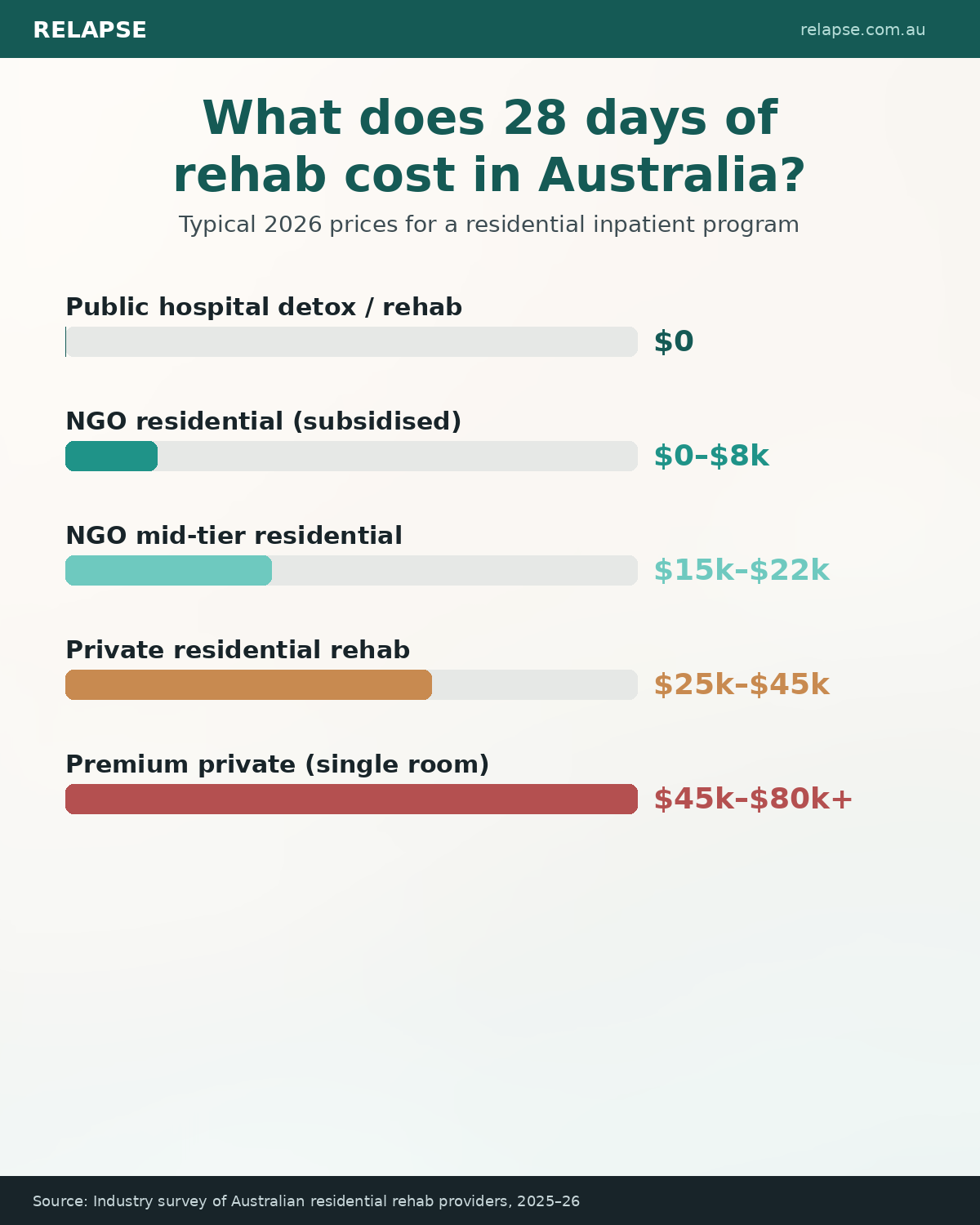
What 28 days of rehab actually costs in Australia

What 28 days of rehab actually costs in Australia

A clear comparison of public hospital, NGO subsidised, NGO mid-tier, private, and premium private inpatient rehab pricing for a 28-day program in 2026.

Industry survey of Australian residential rehab providers, 2025-26

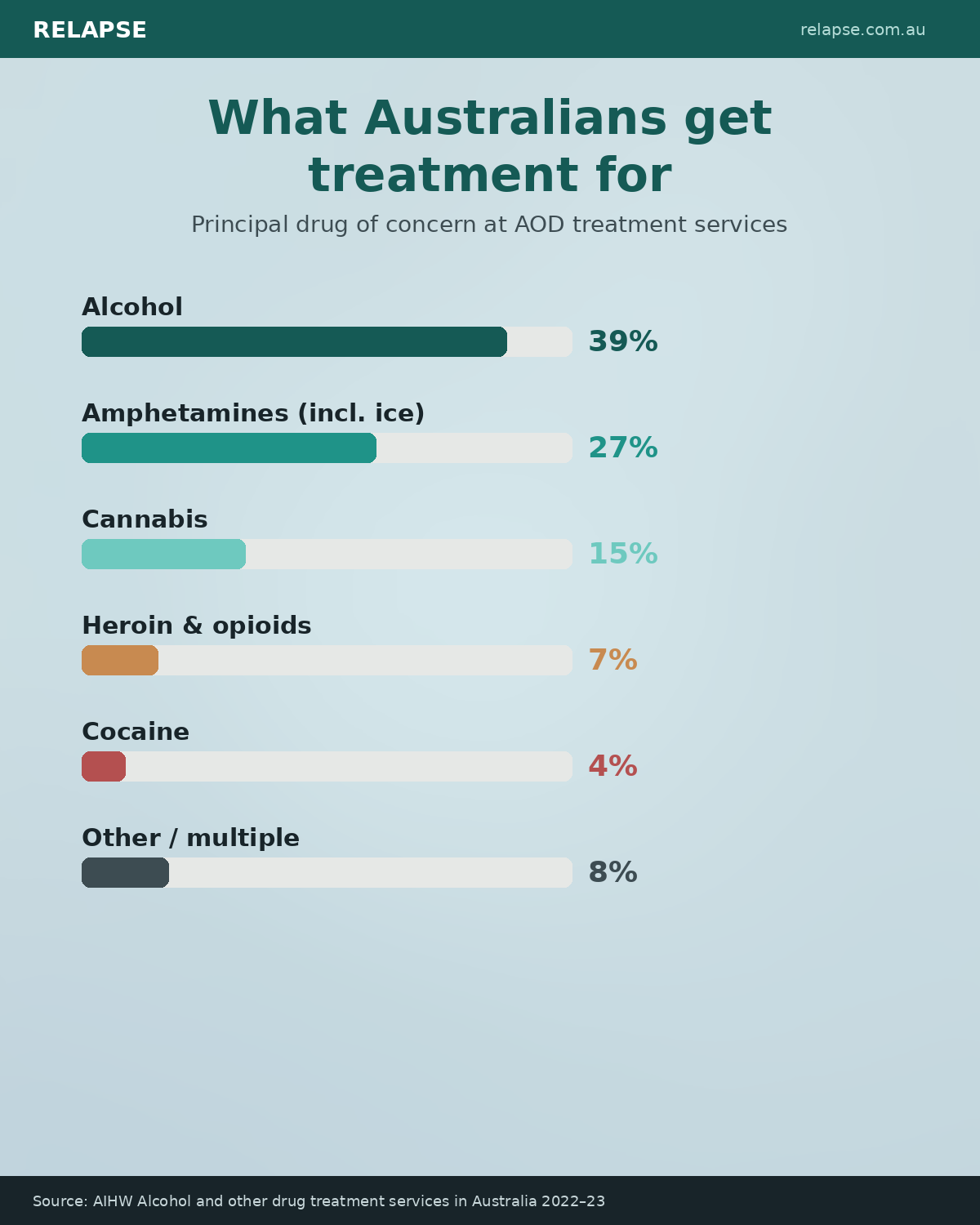
What Australians actually get treatment for

What Australians actually get treatment for

Principal drug of concern at AOD treatment services. Alcohol leads at 39 percent, with amphetamines (including ice) close behind.

AIHW Alcohol and other drug treatment services in Australia 2022-23

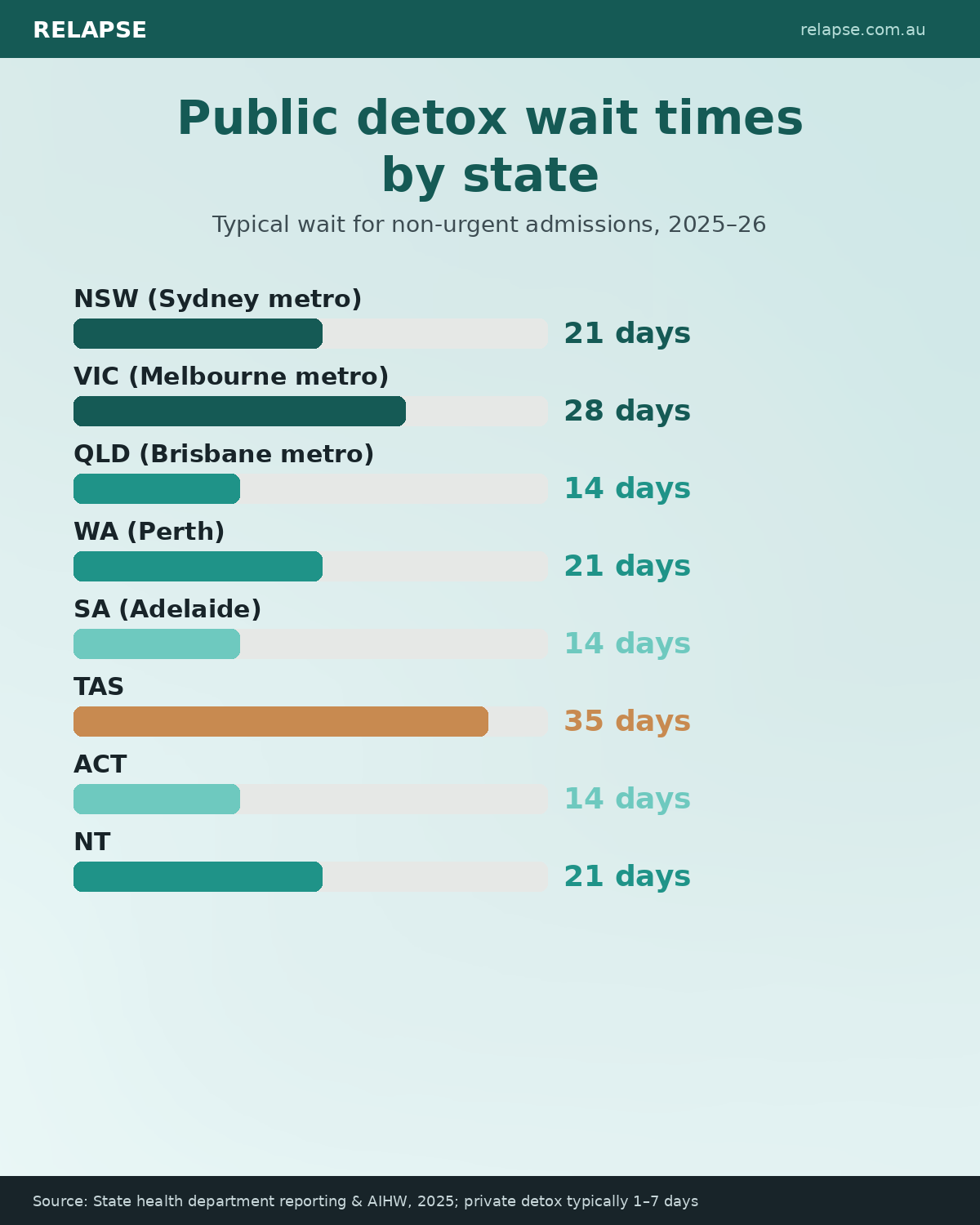
Public detox wait times across the states

Public detox wait times across the states

Typical wait for non-urgent admissions, by state. Tasmania and Victoria currently have the longest waits; Queensland, SA and ACT are shortest.

State health department reporting and AIHW, 2025

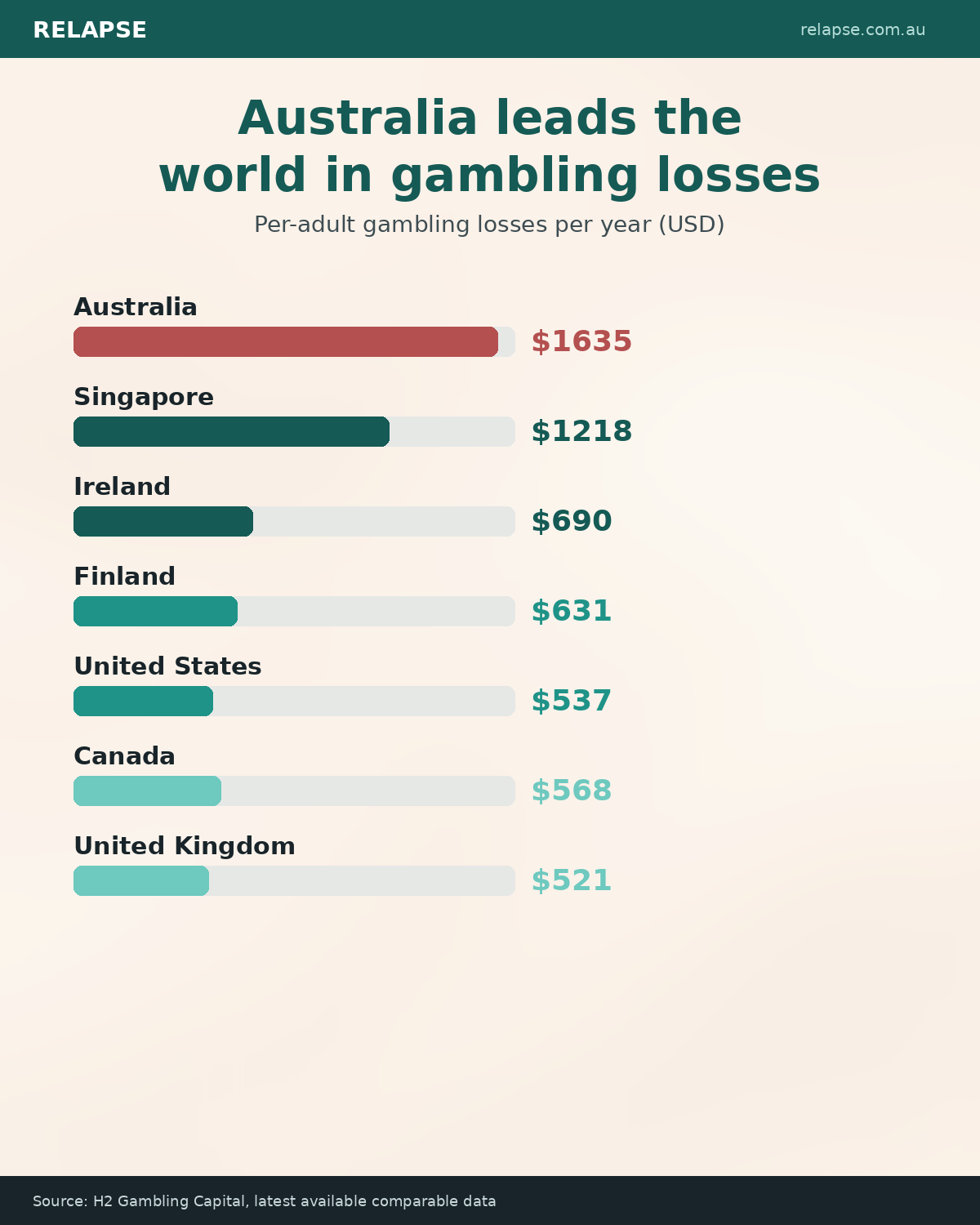
Why Australia leads the world on gambling losses

Why Australia leads the world on gambling losses

Per-adult annual gambling losses across the major OECD economies. Australia loses more per adult than any other country measured β€” by a wide margin.

H2 Gambling Capital, latest available comparable data

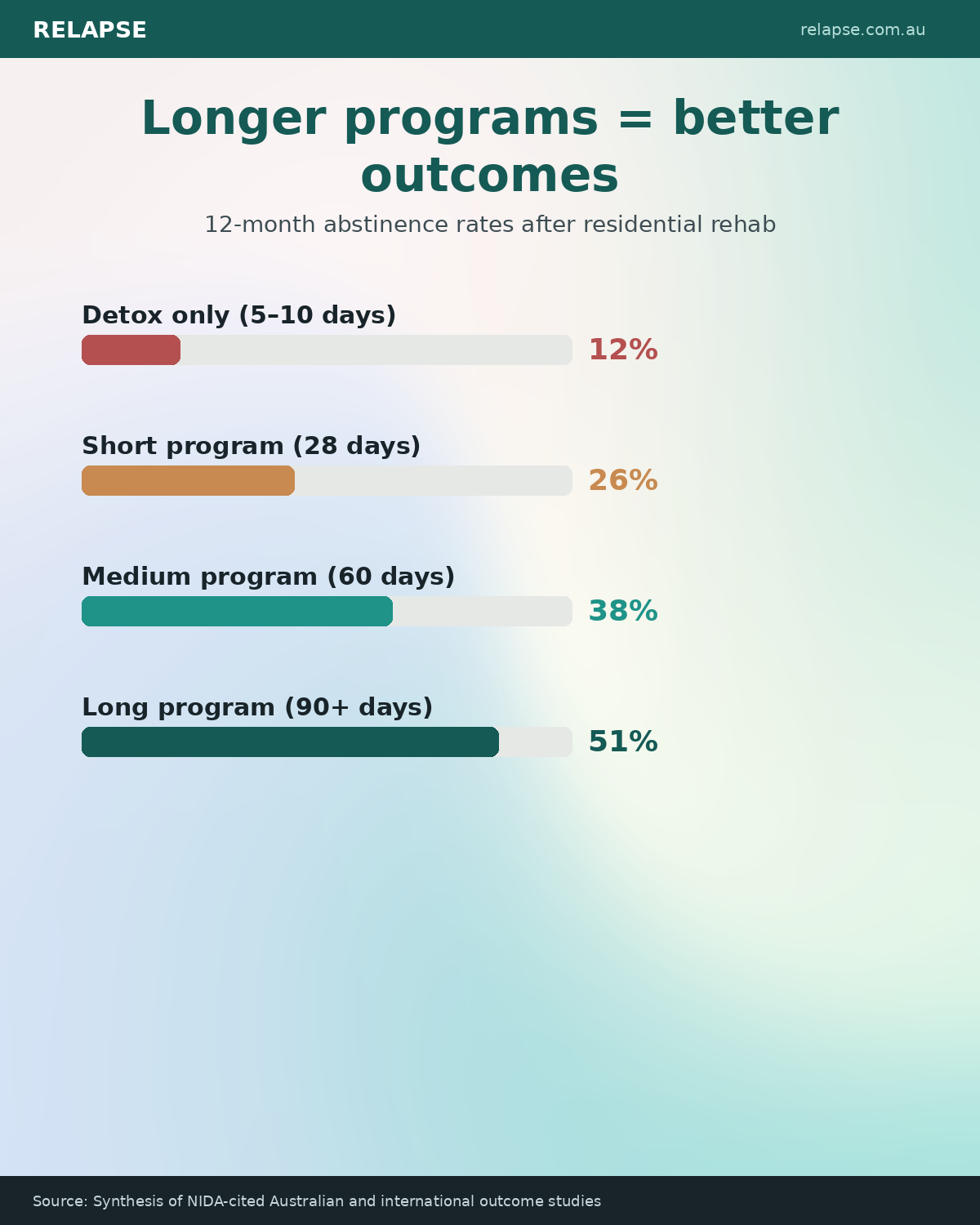
How program length affects long-term outcomes

How program length affects long-term outcomes

12-month abstinence rates after detox-only, 28-day, 60-day and 90-day residential programs. Longer programs consistently outperform shorter ones.

Synthesis of NIDA-cited Australian and international outcome studies

Aftercare is where recovery sticks

Aftercare is where recovery sticks

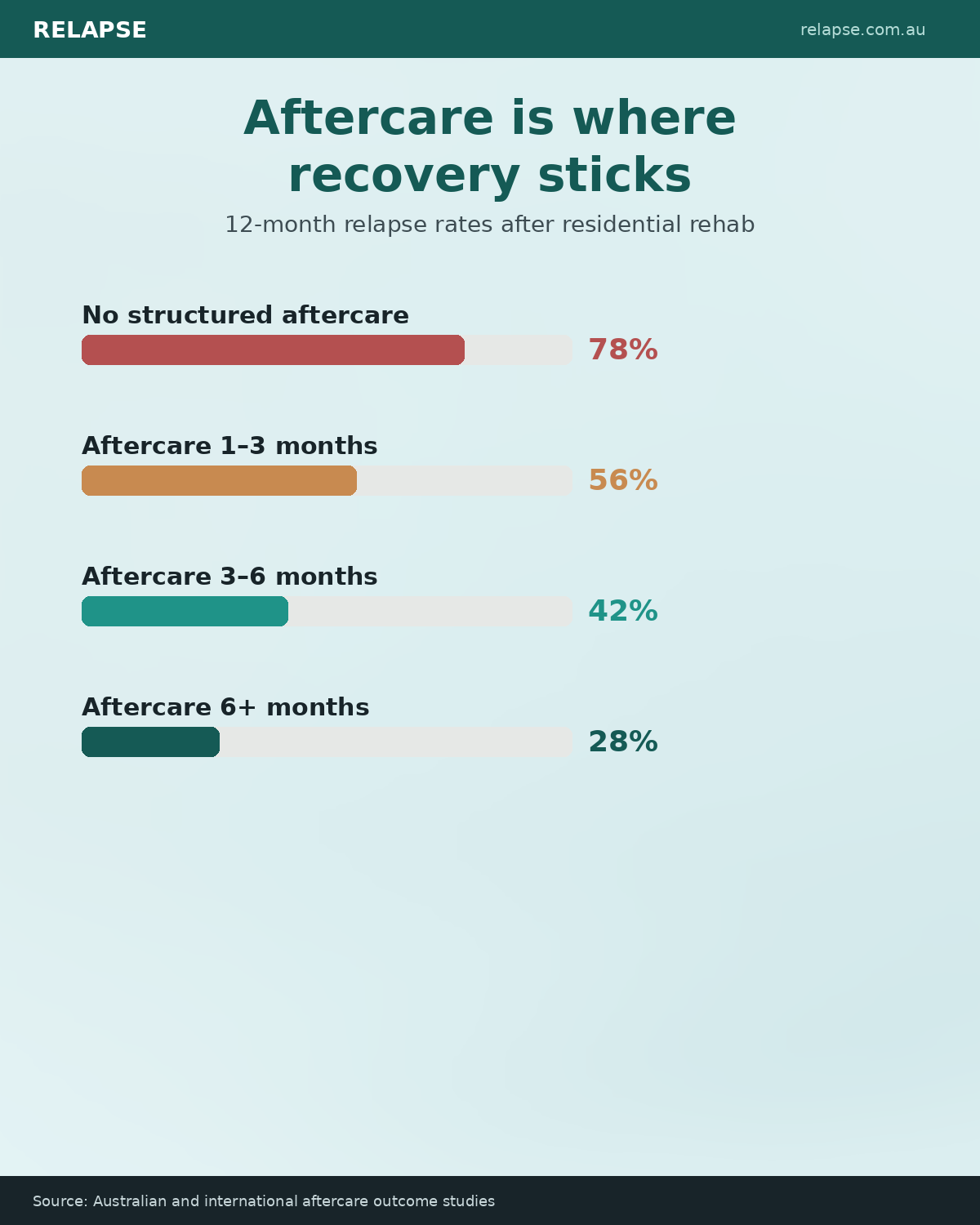
12-month relapse rates by aftercare engagement. People who engage with structured aftercare for 6+ months have dramatically lower relapse rates.

Australian and international aftercare outcome studies

Alcohol in Australia by the numbers

Alcohol in Australia by the numbers

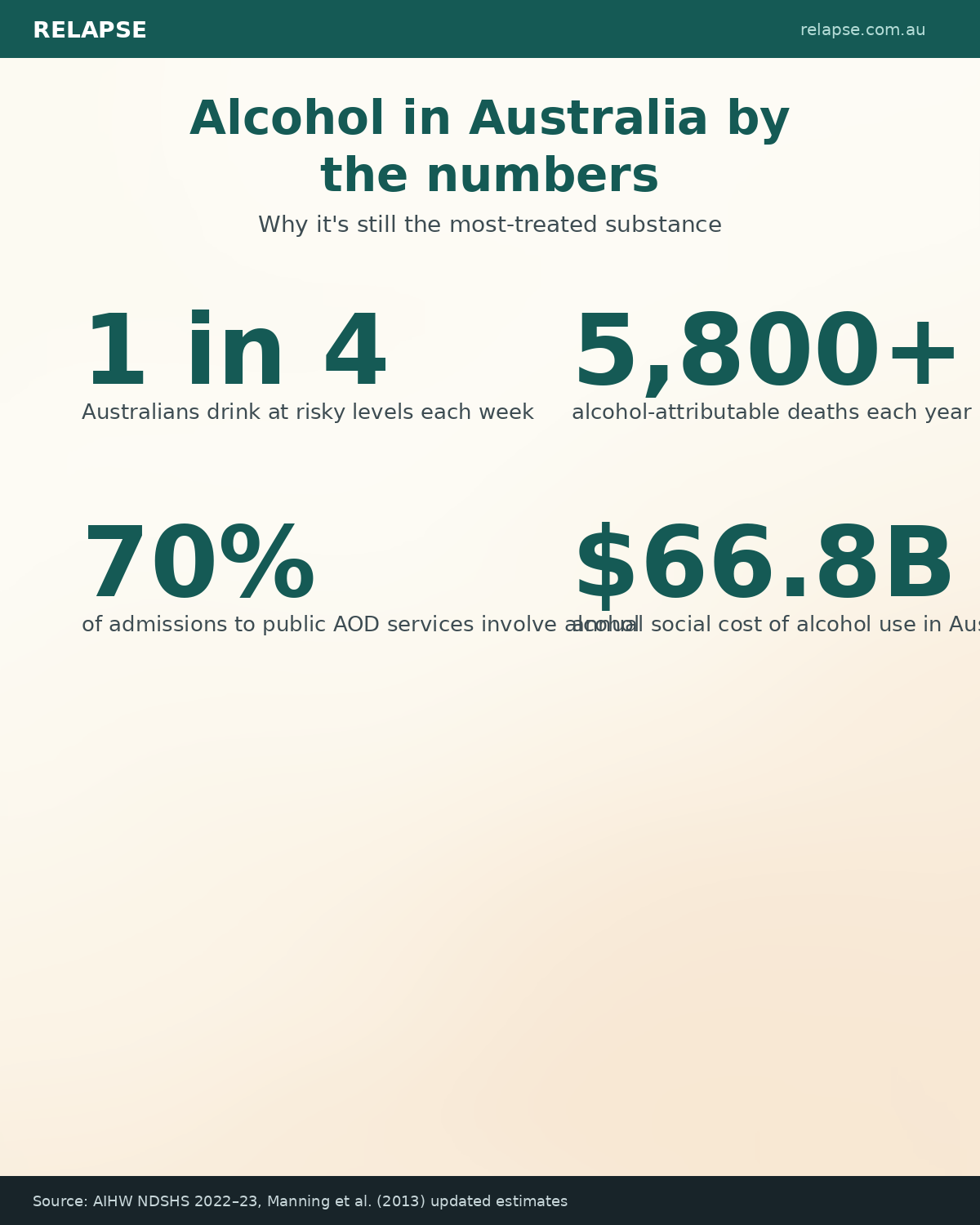
Why alcohol is still the most-treated substance. 1 in 4 Australians drink at risky levels weekly; alcohol is involved in 70 percent of public AOD service admissions.

AIHW NDSHS 2022-23, Manning et al. (2013) updated estimates

How Australians actually pay for rehab

How Australians actually pay for rehab

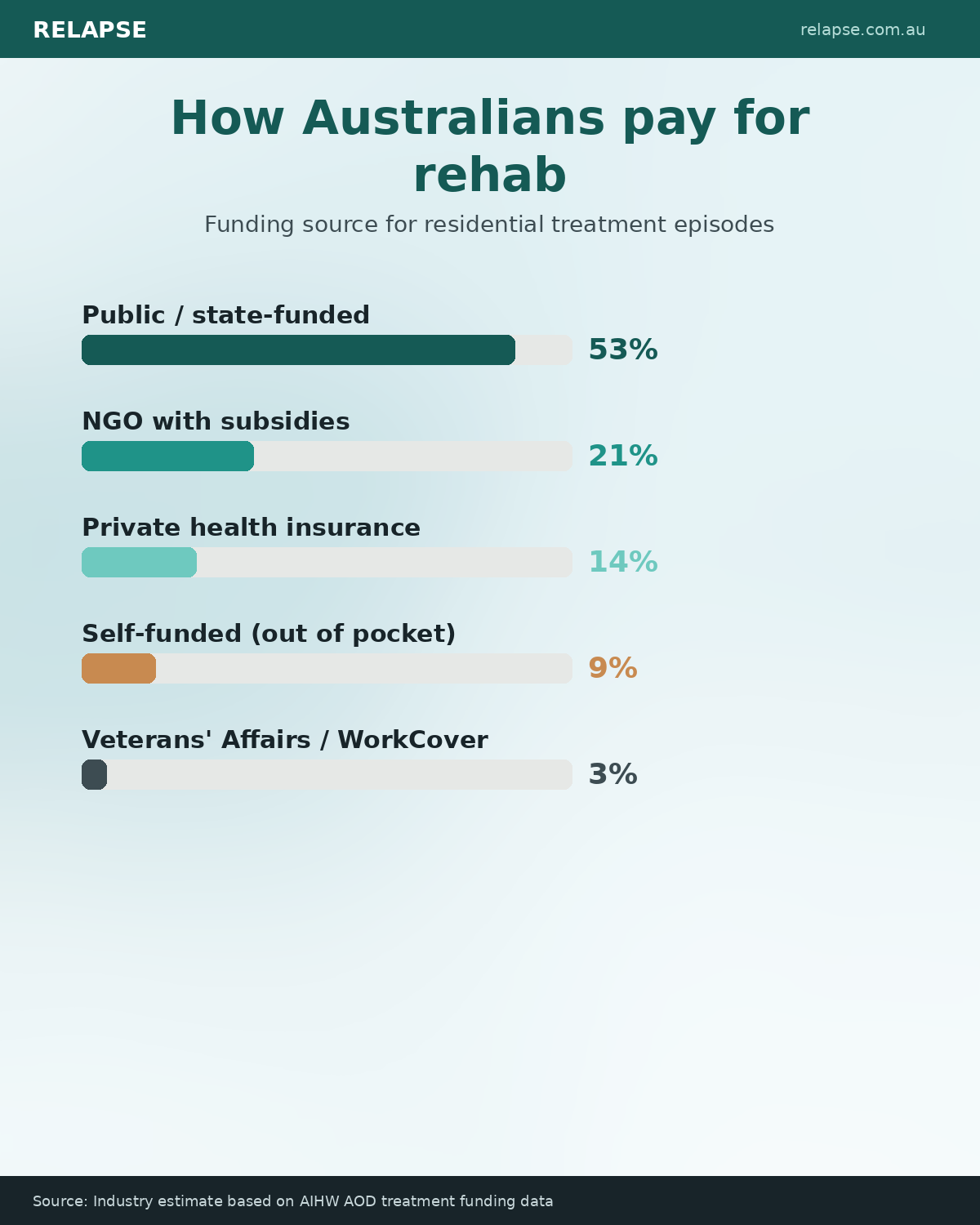
Funding source for residential treatment episodes. Public and NGO programs cover the majority of admissions; private pays for a small but growing share.

Industry estimate based on AIHW AOD treatment funding data

Why addiction rarely comes alone

Why addiction rarely comes alone

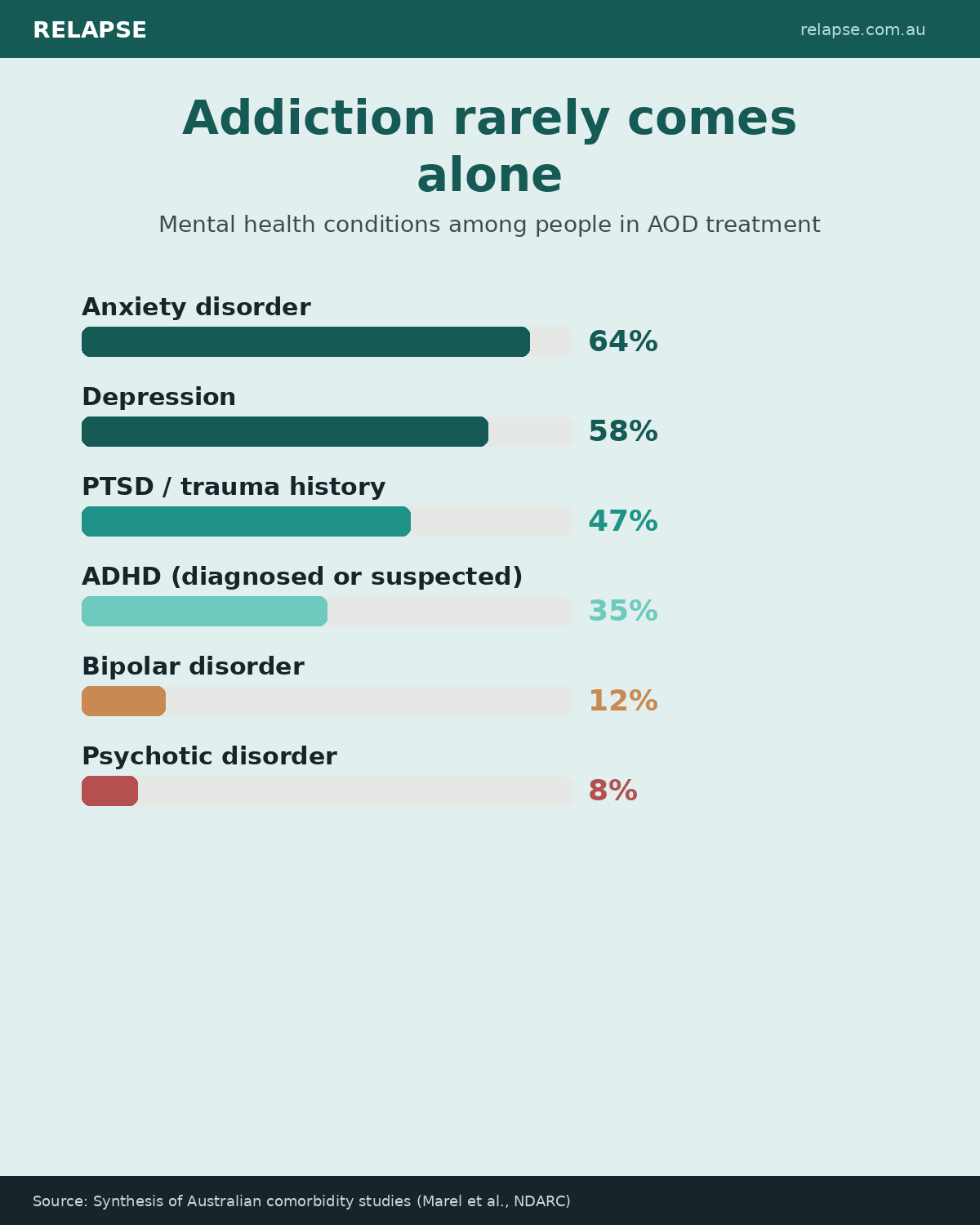
Mental health conditions among people in AOD treatment. Anxiety and depression each affect over half of people in treatment; PTSD affects nearly half.

Synthesis of Australian comorbidity studies (Marel et al., NDARC)

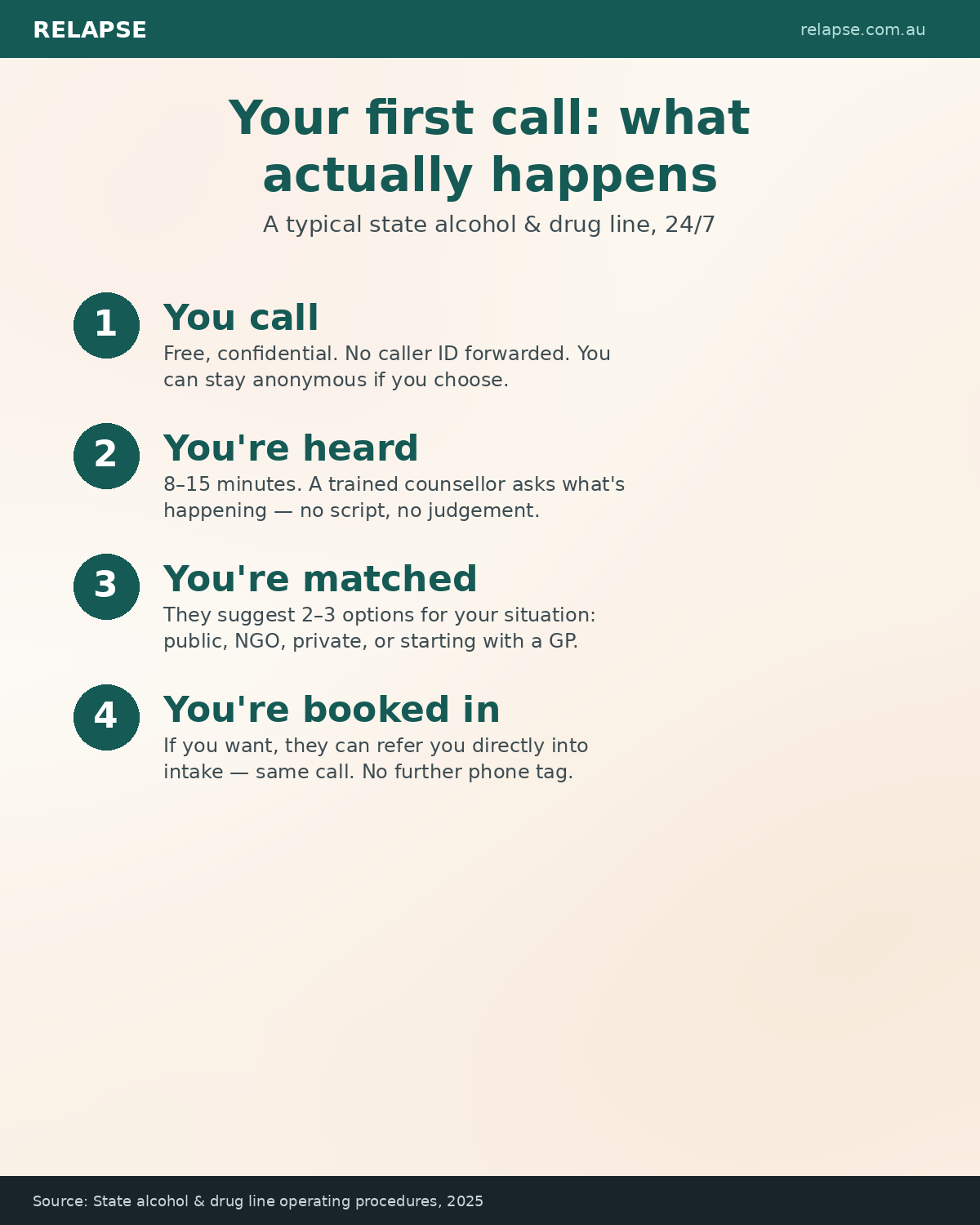
Your first call to a state line: what actually happens

Your first call to a state line: what actually happens

A four-step walk-through of what happens when you call a state alcohol and drug line. No script, no judgement, no caller ID forwarded.

State alcohol & drug line operating procedures, 2025

How to use these infographics

All ten infographics on this page are free to use under Creative Commons Attribution 4.0 (CC BY 4.0). You can:

  • Embed them in articles, blog posts, or social media.
  • Use them in lectures, presentations, training materials, or staff briefings.
  • Reproduce them in print materials, including treatment-service brochures.
  • Translate or adapt them, as long as you credit the original.

We ask only that you include a credit line β€” for example: "Source: Relapse.com.au, relapse.com.au/research" β€” and link back to this page where reasonable. If you use them in a publication or paid product, we would love to hear about it.

A note on the data

Infographics on this page synthesise public data from the Australian Institute of Health and Welfare (AIHW), the Australian Bureau of Statistics (ABS), the National Drug and Alcohol Research Centre (NDARC), state health department reporting, and peer-reviewed Australian outcome studies. Where industry data is used (rehab pricing, funding mix), we say so on the relevant graphic.

Recovery is individual and the numbers above describe populations, not people. If you or someone close to you is wrestling with the figures on these graphics, the practical next step is a free, confidential conversation β€” request a callback below or call your state line directly.

Suggested citation

For academic, journalistic, or professional use, please cite as: Relapse.com.au (2026). Australian rehab data and research. Retrieved from https://relapse.com.au/research/.

Specific infographics can be cited individually β€” each PNG includes a source line at the bottom of the image. If you need higher-resolution versions, vector files, or translations into another language, email [email protected] and we will prioritise the request.

Why we make these free

Australian addiction recovery is poorly served by good public-facing data. Most of what is available is buried in PDF reports written for clinicians and policy-makers rather than the people making decisions about their own treatment or that of someone they love. The infographics on this page are an attempt to close that gap by translating the most important numbers into formats that journalists, peak bodies, treatment providers, GP practices, and educators can use directly.

We benefit from the visibility β€” every embed includes a credit link back to Relapse.com.au β€” but the primary motivation is honest: better public understanding of how Australian rehab actually works, what it costs, and what predicts long-term recovery is good for everyone in the field, including us.

Get free, confidential help today

Tell us a bit about your situation and a recovery specialist will call you back β€” usually within an hour during business hours. No pressure, no judgement, no cost.

  • 100% confidential β€” covered by Australian privacy law.
  • No cost for the consultation. Public and private options available.
  • No judgement β€” you don't need to have it figured out before you call.

Prefer to call directly? Lifeline: 13 11 14 (24/7). Emergency: 000.

By submitting, you consent to be contacted by Relapse or a partner treatment provider about treatment options. We will never share your details with anyone outside that purpose. See our privacy policy.