
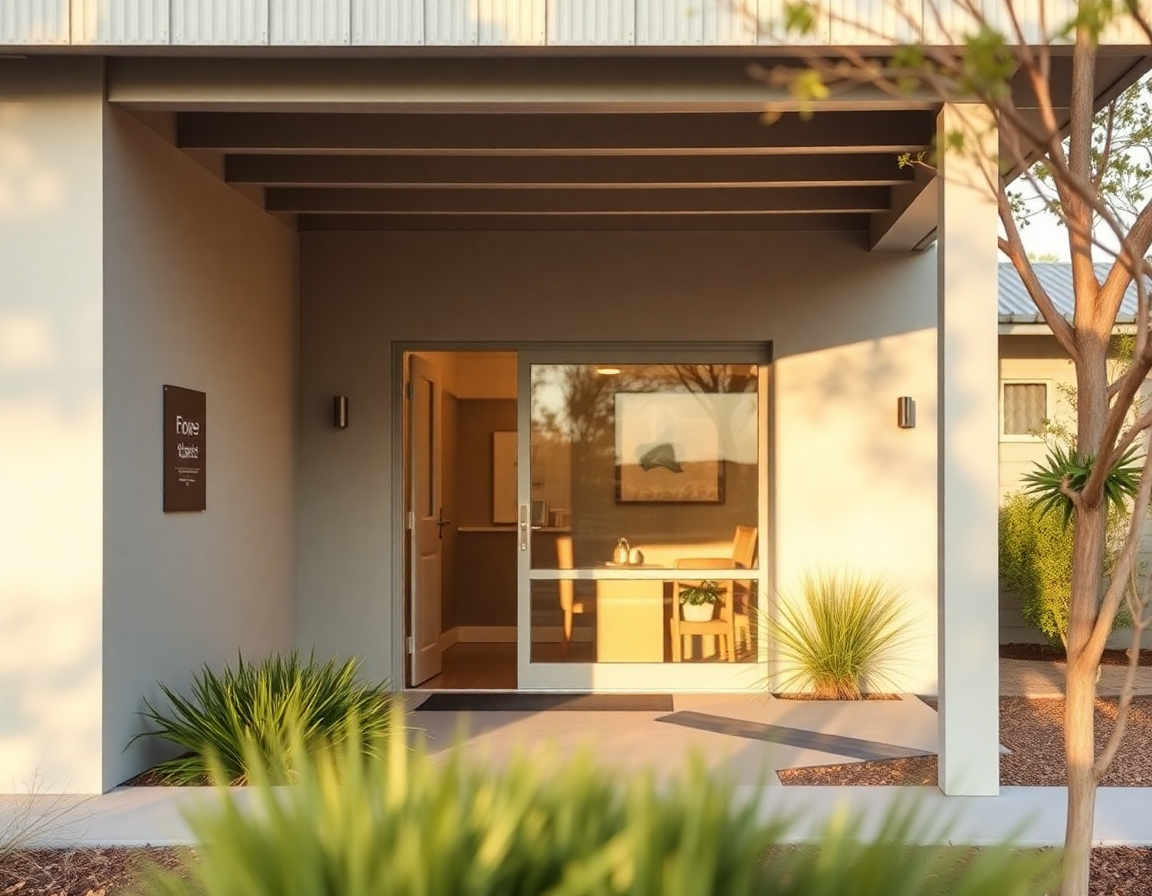
P3 Recovery Winnellie
Treatment service
5.0
· 168
12/14 Winnellie Rd, Winnellie NT 0820, Australia
Skilled staffWelcoming
Northern Territory
Find treatment services across Darwin and surrounds — including detox, residential rehab, outpatient programs, and counselling. Free, confidential help to choose the right one.
9 verified rehab, detox, counselling, and support services serving Darwin and surrounding suburbs.
Treatment service
12/14 Winnellie Rd, Winnellie NT 0820, Australia
Treatment service
2/655 Stuart Hwy, Berrimah NT 0828, Australia

Outpatient program
24 Beaton Rd, Berrimah NT 0820, Australia
Treatment service
Hippocrates Rd, Tiwi NT 0810, Australia
Outpatient program
Community Centre, 18 Bauhinia St, Nightcliff NT 0810, Australia
Outpatient program
Hugh NT 0872, Australia
Outpatient program
33 Charles St, Stuart Park NT 0820, Australia
Outpatient program
16 Beaton Rd, Berrimah NT 0828, Australia
The NT has the highest per-capita rate of alcohol-related harm in Australia, and the Banned Drinker Register and other supply-reduction measures sit alongside the treatment system. For residential rehab, many Territorians travel interstate — most commonly to Adelaide, Brisbane, or the Sunshine Coast — though local NGO residential options including those in Darwin and Alice Springs do exist.
Darwin's AOD services are coordinated through the Northern Territory Department of Health and a network of NGO providers, with significant cultural complexity — Aboriginal-specific services are an essential part of the NT system. Amity Community Services NT on 1800 131 350 is the main 24/7 first-call line.
Whether you are looking at residential rehab, an outpatient program, medically supervised detox, or just want to start with a GP consultation, the same principle applies: the right pathway depends on the substance, the severity of dependence, and what is practical for your work and family situation. The Amity Community Services NT on 1800 131 350 is the fastest first call — they know the Darwin services personally, can match you to wait times, and can refer you directly into intake.
The right type of treatment depends heavily on what you are recovering from. Choose a substance below for a tailored guide to Darwin options — each guide includes the medical considerations specific to that substance, what local treatment looks like, and what the public, NGO, and private pathways involve.
Alcohol rehab in Darwin
Alcohol is the most commonly treated substance in Australian rehabilitation services. Long-term heavy use can …
Ice (Methamphetamine) rehab in Darwin
Methamphetamine — most commonly the crystalline form known as ice — is a powerful stimulant. Its impact on Aus…
Cocaine rehab in Darwin
Cocaine use in Australia has risen significantly, particularly in major cities. While withdrawal is rarely med…
Heroin & Opioids rehab in Darwin
Opioids — including heroin and prescription painkillers like oxycodone — produce powerful physical dependence.…
Cannabis rehab in Darwin
Cannabis is the most widely used illicit drug in Australia. Most people who use cannabis don't develop depende…
Prescription Medications rehab in Darwin
Dependence on prescription medications — most often benzodiazepines, opioid painkillers, or sleeping tablets —…
Gambling rehab in Darwin
Australia has the highest per-capita gambling losses in the world. Problem gambling is recognised as a behavio…
Almost every conversation about Darwin rehab comes down to a three-way choice between public, NGO (non-government organisation), and private treatment. The differences are real, but they aren't the marketing differences you usually read about. Here's how each sector actually works.
Public addiction medicine — delivered by state health systems and large public hospitals — is free at the point of access for Medicare-eligible Australians. It is genuinely high quality: addiction medicine is a recognised specialty, public detox units are staffed by specialist clinicians, and the underlying treatment models (CBT, motivational interviewing, medication-assisted treatment for opioids and alcohol) are evidence-based and current. The trade-off is access. Wait times for non-urgent residential admissions typically run from one to several weeks, with prioritisation for crisis presentations: pregnancy, post-overdose, severe co-occurring mental health crises, homelessness, child-protection involvement. If your situation fits one of those priorities, public can be remarkably fast.
NGO services — Salvation Army Bridge, Odyssey House, Lives Lived Well, Cyrenian House, We Help Ourselves, Holyoake, Karralika, and many others — sit between public and private on cost and access. Many run on partial government funding plus client contributions, with sliding-scale fees. Some are free. NGO providers run a disproportionate share of Australia's longest-established residential rehabs and many of the country's most successful 60- and 90-day therapeutic communities. They also run most of the specialist programs you can't easily access elsewhere: women-only programs, parents-with-children programs, Aboriginal-specific services, and youth programs. Wait times are typically shorter than public, longer than private — usually one to three weeks for non-urgent admissions.
Private inpatient rehab admits within days, offers single-room accommodation, higher staff-to-client ratios, and typically charges $25,000–$45,000 for a 28-day program — sometimes meaningfully more for premium facilities. Private health insurance with hospital cover and psychiatric inclusion can offset between $400 and $700 per day, leaving an out-of-pocket cost in the $10,000–$25,000 range on a 28-day program. Private isn't automatically better than public or NGO; outcome studies consistently find that the two strongest predictors of long-term recovery are program length and aftercare engagement, not price band. What private buys is access, comfort, and a higher staff-to-client ratio — none of which is unimportant, but none of which is treatment quality on its own.
The most useful first call in any of the three pathways is your state alcohol and drug line — they know all three sectors personally, can match you to wait times and program features, and have no commercial stake in which option you choose. From there, calling two or three specific providers to compare program length, clinical staffing, aftercare, and cost is the next step. The right choice depends on three things: severity of dependence, stability of your home environment, and what you can afford. Severe physical dependence with unsafe withdrawal needs medically supervised detox first. Unstable home environment usually points toward residential. Stable home plus moderate dependence usually suits outpatient. None of those rules are absolute.
The right format isn't the most expensive one or the most marketed one — it's the one that fits the severity of dependence, the stability of your home environment, and the practical realities of work, family, and finances. There's no single right answer, but the framework below covers most situations in Darwin.
Severe daily alcohol use, daily opioid use (heroin, oxycodone, fentanyl), and long-term high-dose benzodiazepine use all involve withdrawal that can be medically dangerous and shouldn't be attempted without supervision. Severe alcohol withdrawal can cause seizures and delirium tremens. Benzodiazepine withdrawal can cause seizures and prolonged neurological symptoms. Opioid withdrawal isn't usually life-threatening but is intensely uncomfortable and produces high relapse risk if unmedicated. For these substances the safest first step is a 5–10 day medically supervised detox in a hospital, dedicated detox unit, or supervised home-detox program — followed by rehab, not instead of it.
Residential (inpatient) rehab — staying onsite at a facility for 28 days to several months — is the right choice when home life is destabilising recovery, when previous outpatient attempts haven't held, when there's significant co-occurring mental health concern, or when the person needs a complete break from current routines to reset. Programs of 60 and 90 days consistently show better long-term outcomes than 28-day programs in the research, particularly for severe dependence. The trade-off is time away from work and family — 28 days minimum, often more — and cost in the private sector.
Outpatient programs — living at home, attending sessions 2 to 5 times per week — are the most common form of AOD treatment in Australia, not because they're a "lite" version, but because for many people they're the more clinically appropriate format. Outpatient suits people whose home environment is reasonably stable, who can keep working, who want to integrate recovery skills into normal life from day one, or whose dependence is at a level where the structure of residential isn't necessary. The core therapeutic content — CBT, group therapy, relapse-prevention skills — is the same as residential. The wraparound is what differs.
The single most consistent finding in addiction outcome research: people who engage with structured aftercare for 12 months or more after their primary treatment episode have dramatically better long-term outcomes than those who treat treatment as a one-off. Strong aftercare is rarely one thing — it's a stack: weekly counselling tapering over months, peer support (SMART Recovery, AA, NA, CA), continued GP and addiction-medicine follow-up, ongoing medication where relevant, and a written relapse-prevention plan. When evaluating any program, the question "what does aftercare look like in the 12 months after I leave?" is the single most predictive question you can ask.
The first call is the hardest part of recovery — and once it's made, things move. People are often surprised by how matter-of-fact the conversation is. Nobody asks for your full medical history. Nobody lectures. The clinician on the other end has heard your situation thousands of times, and there is no version of it that will be shocking to them.
A typical call runs 8–15 minutes. You'll be asked what's going on — broadly, in your own words — and a few practical questions: which substance, how long, how severe, your living situation, whether anyone else is involved, whether there's an immediate safety concern. The point isn't to assess you against criteria; it's to match you to the right pathway. After that, the clinician will usually outline two or three options that fit your situation: public hospital detox, an NGO residential program with current places, an outpatient program through your GP, a specialist addiction medicine consultation, or — if there's an urgent safety issue — a different service entirely.
State lines are bound by Australian privacy law. Calls are confidential. They don't appear on Medicare records, employer records, or any database visible to people outside the treatment system. Caller ID isn't forwarded to the next service unless you ask for it to be. You can stay anonymous if you choose. You can hang up at any point. You don't need to commit to anything on the call.
Direct line: 1800 131 350 — Amity Community Services NT
Public (government-funded) detox and rehab is free at the point of access for Australian residents, though wait lists can range from days to several weeks. Private inpatient rehab typically costs $25,000–$45,000 for a 28-day program; some private health insurance funds cover a portion. We can help you understand your options on a free confidential call.
Detox (withdrawal management) is the short medical phase — usually 3–10 days — where the body adjusts to being without the substance. Rehab (rehabilitation) is the longer-term work that follows: counselling, group therapy, relapse prevention, and rebuilding daily life. Most people benefit from doing detox first, then rehab — going straight into therapy while still withdrawing rarely sticks.
No. People who seek help earlier — before losing housing, jobs, or custody — generally have shorter, easier recoveries. Waiting for rock bottom is one of the most damaging myths in addiction recovery. If your use is affecting any part of your life, that's enough.
Treatment in Australia is bound by strict privacy laws (the Privacy Act 1988 and state-specific health records legislation). Clinics cannot disclose your attendance to employers without written consent, and Medicare records of mental health treatment are not visible to employers. Many people take leave under general medical grounds without disclosing the specific reason.
It depends on the program. Outpatient programs let you continue work and family commitments, with sessions in the evenings or weekly. Residential (inpatient) programs require 28 days to several months away. Many Australians use accumulated annual leave, long service leave, or carer's leave. Some employers offer paid 'addiction leave' under EAP programs.
Practical follow-on guides covering the substance-specific decisions, costs, and what to expect from each treatment format.
Northern Territory state overview
The wider state context — public, NGO, and private services across Northern Territory.
Read guide →
Substance-specific guides
Tailored treatment guidance by substance.
Read guide →
What rehab costs
2026 cost breakdown across all sectors.
Read guide →
Free rehab access
Public detox and rehab in Darwin is free — how to access it.
Read guide →
How to choose a rehab
A practical framework for picking the right program.
Read guide →
What to expect in detox
A realistic week-by-week walk-through of medical detox.
Read guide →
Tell us a bit about your situation and a recovery specialist will call you back — usually within an hour during business hours. No pressure, no judgement, no cost.
Prefer to call directly? Lifeline: 13 11 14 (24/7). Emergency: 000.